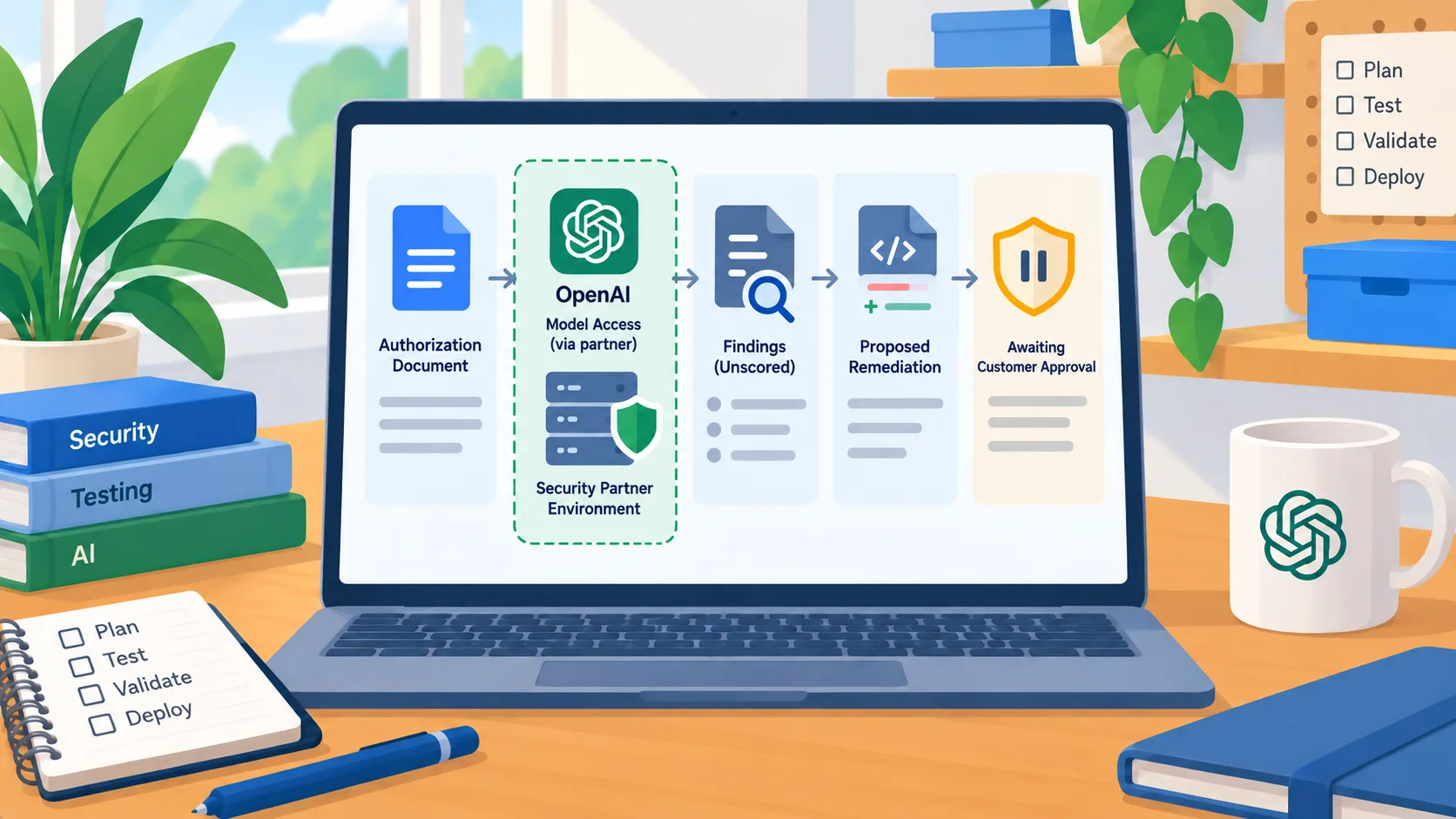
The announcement is about partner access
On August 10, OpenAI announced an expansion of its Daybreak Cyber Partner Program. The company said approved security partners could bring its advanced cyber models into products, managed services, and customer engagements. It described two access tiers, Blue for a broad set of defensive security workflows and Red for more specialized, closely governed work such as red teaming and penetration testing. OpenAI’s announcement says safeguards can include identity verification, defined testing scopes, logging, monitoring, and human oversight. It also says access to the underlying models remains with the approved partner rather than transferring directly to the customer.
For a business owner, the practical question is not simply “Can we use the model?” It is who operates the model, what work the partner is authorized to perform, where the results go, and who approves changes. A partner arrangement can make advanced capability available through a security provider without the customer running its own specialized model program. It also creates a new dependency on the partner’s contract, process, expertise, and evidence.
Map the engagement before a test begins
Before authorizing a security engagement, write a short scope that names the systems, accounts, and environments included, the permitted techniques, the timing, and the contact who can stop the work. Ask the provider to identify which tasks rely on AI, which people review model output, and which actions the system can take without a person. Scope should include data handling and any third-party services or accounts that could be touched.
Have the provider show how access is approved and withdrawn. Confirm how credentials are isolated, which logs are available to your organization, how findings are validated, and what evidence is retained. A model-generated finding is not automatically a confirmed vulnerability. A patch suggestion is not automatically safe to merge. The partner’s technical team should validate each material result in the authorized environment and explain the basis for remediation.
Treat Blue and Red as work categories, not quality labels
OpenAI’s description presents Blue and Red as access tiers for different types of work. It does not promise that one tier will suit every customer or that a provider has authority over every system in your environment. Ask the partner to explain why the proposed tier matches the engagement and what approvals are required before testing. Red-team or penetration-testing work belongs inside a written authorization with defined targets and boundaries. Defensive work still needs controls when a tool can access sensitive code, infrastructure, or security records.
A useful evaluation begins with one owned repository or a documented test environment, not a live, high-impact target chosen only because the model is capable. Review a sample of findings for accuracy and relevance. Compare the provider’s report with your existing process: Did it identify a meaningful issue, validate impact, and give a fix that your team could test? Record false positives, missed cases, and reviewer effort. Do not rely on vendor or partner anecdotes as a substitute for evidence from your own systems.
Make accountability visible to the buyer
Your contract and security runbook should say who is responsible at each handoff. The provider may operate the model, but your organization remains responsible for approving access to its systems and deciding whether a proposed change is acceptable. Make sure escalation paths work outside ordinary business hours if the engagement involves a production risk. Confirm that the partner can show what it did, when it did it, and under which authorization.
The next step for a buyer is to ask a prospective provider for a one-page workflow: scope approval, model access, human review, evidence retention, remediation testing, and closure. If the provider cannot explain those controls in plain language, do not widen the engagement. Advanced AI can help a security team move through work faster, but the business case depends on verified findings and accountable people at each decision point.