A common interface could reduce bespoke device glue
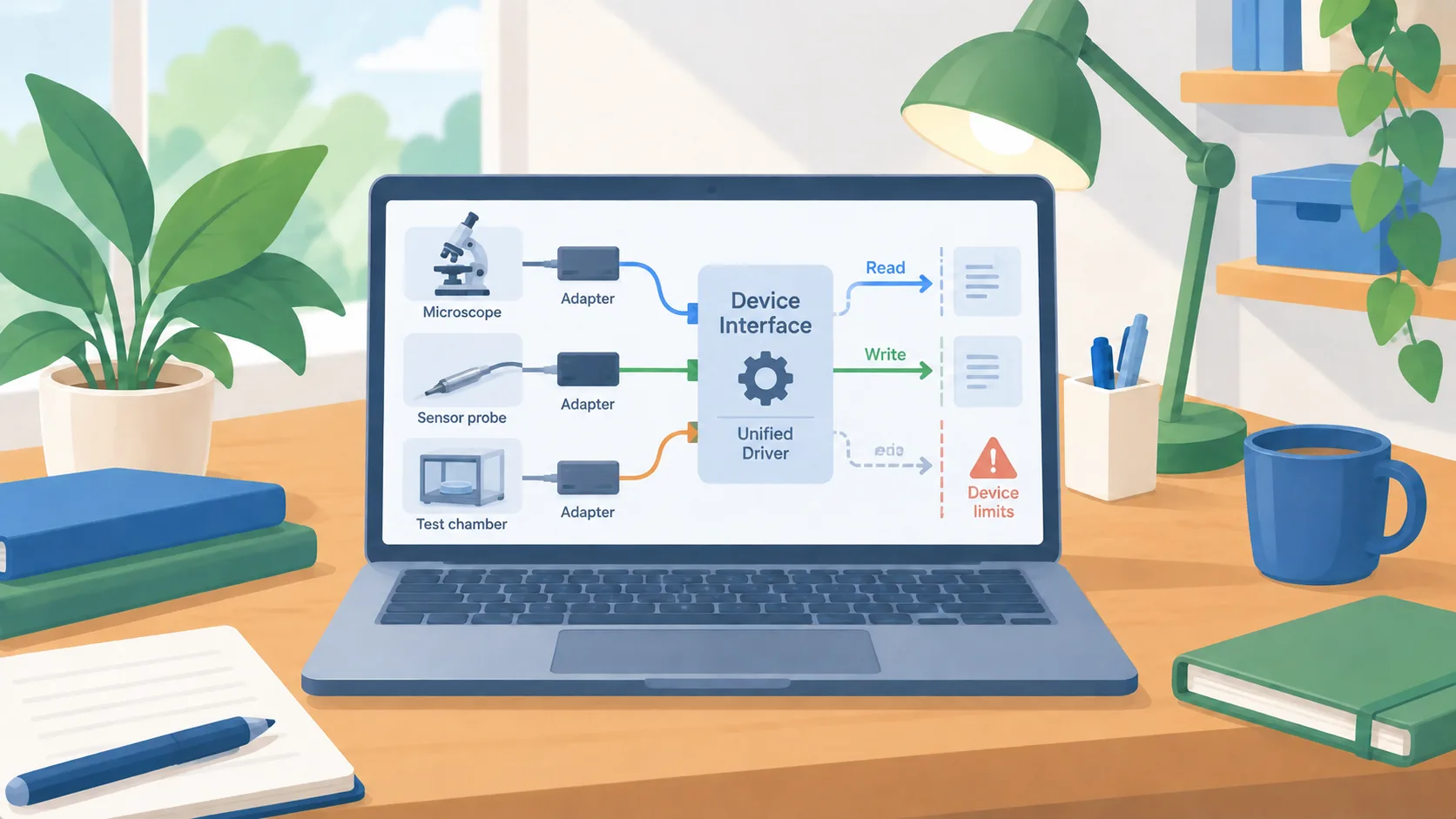
Anthropic announced a research preview of its Model Hardware Standard on August 27, 2026. The proposal gives programmable instruments a shared driver interface with common read and write operations, a discoverable description of each device, and metadata about what it measures, changes, and must keep within safety limits. Agents can reach those controls through mechanisms such as MCP, a command line, or code. Anthropic said the preview was for a first group of research labs and manufacturers while partners develop evaluations and operating practices; it was not a general release.
The business problem is older than agents. A lab or plant can have useful machines that each speak a different software language. A new workflow then depends on custom integration, tacit operator knowledge, and careful sequencing. A common interface could make that work easier to reuse, but it does not make a physical process safe by itself. A standardized command can still set the wrong temperature or move a robot arm at the wrong time.
Describe the machine before granting control
For a business considering this category, begin with an equipment inventory rather than an agent demo. Record each device’s supported commands, operating range, interlocks, emergency stop, maintenance state, and the person responsible for validating a procedure. Put those limits somewhere the control layer can enforce, not only in a prompt. Ask the vendor or integrator how a driver rejects an out-of-range write, how device state is confirmed, and what happens after a timeout or dropped connection.
Treat reads and writes differently. A read-only status query can help an operator understand a run. A write can change a process, damage a sample, or put equipment and people at risk. Require authorization around new commands, material parameter changes, and movement near a person. For repeated procedures, prefer a reviewed, deterministic sequence for routine steps, with the agent assisting on diagnosis or planning where human oversight adds value.
Pilot a contained workflow
A reasonable pilot has one instrument, a nonhazardous test task, known input material, and an operator watching the run. Test normal operation, bad inputs, sensor failures, and a communications interruption. Verify not only that the action was issued, but that the machine reached the expected state and that the result was recorded. Keep a manual fallback and define when the run must stop rather than retry. A model that can recover from one error may repeat the wrong action if the underlying cause remains.
The preview is most relevant to teams already spending time on device integration and orchestration. A small office with no programmable equipment has no reason to adopt it just because AI is involved. A manufacturer should also ask whether the planned interface will remain portable across device vendors and model providers, and whether open-source plans include a clear governance and support path.
The next step is an integration map
Choose one recurring, low-consequence device workflow and map the current steps, handoffs, data, and safety checks. Compare its integration cost with the proposed shared interface, then establish who owns device metadata and change approval. Do not connect production equipment until the driver, limits, logs, emergency behavior, and operator procedure have been tested together. The announcement signals a direction for physical AI integration; each deployment still needs evidence that its specific equipment behaves within its own safe envelope.