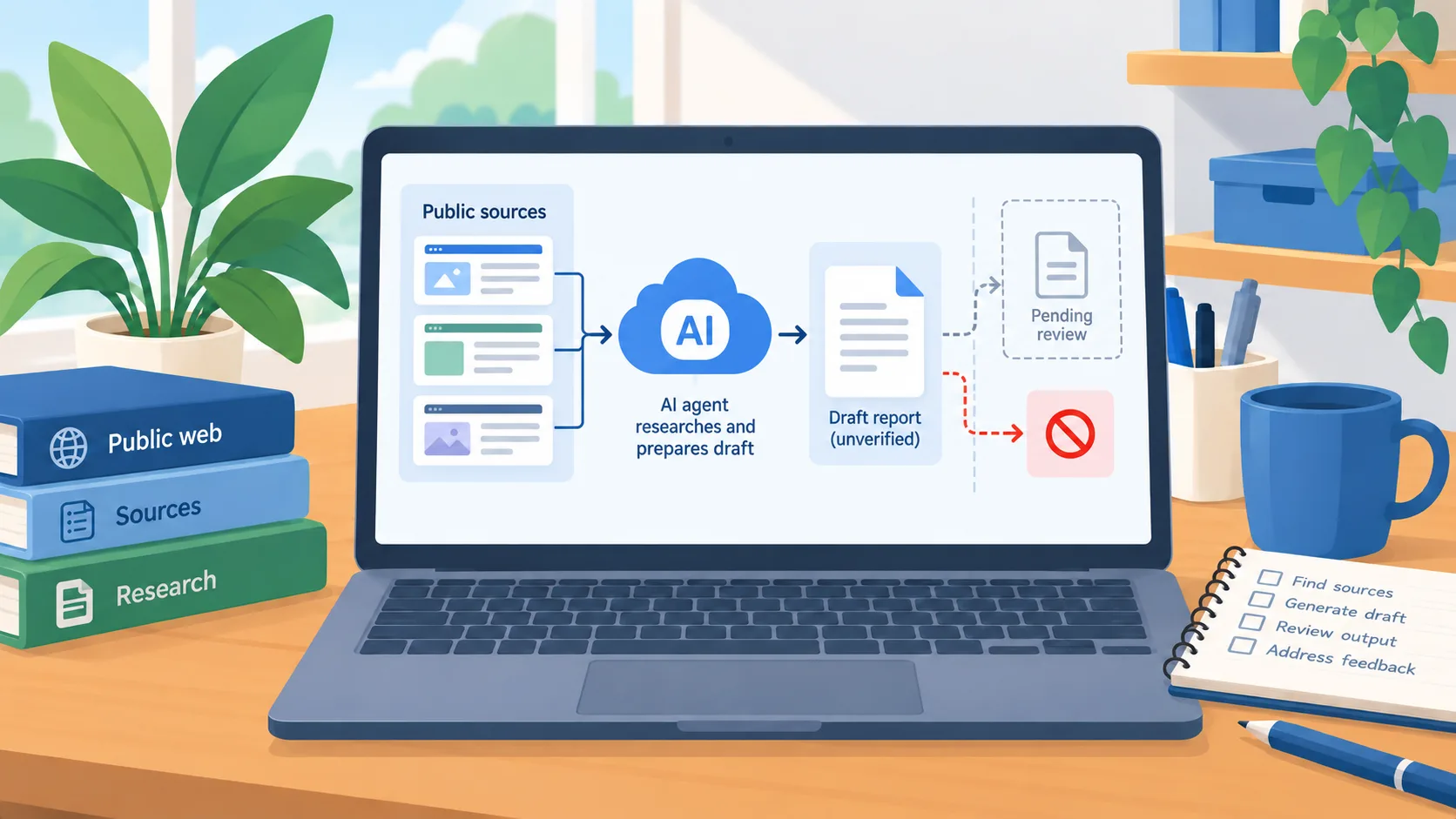
A cloud computer changes where the work runs
xAI introduced Grok Bot on August 11 as a beta service for eligible SuperGrok and Cursor subscribers. The company describes Bots as having their own cloud computer, signing into tools and apps, and continuing work when a user steps away. It says a Bot returns when it needs a person’s approval. The launch page lists availability for specific subscription tiers on desktop and iOS, and says Bot usage is separate from existing Grok and Cursor plan usage. Enterprise users were directed to a waitlist.
For a small business, this is different from asking a chatbot to draft a response in a conversation. A cloud computer can interact with websites and workplace tools, including places without a direct integration, while a job continues outside the user’s active session. That can make repetitive coordination easier to test, but it also means the business needs to understand what account access the agent has and what happens when it is uncertain. The vendor’s examples are not independent proof that every workflow will complete safely or reliably.
Choose one narrow task with a clear finish line
A useful first task is a read-and-prepare workflow rather than an open-ended instruction to “run sales” or “manage the inbox.” For example, ask the Bot to collect information from an approved list of public pages and prepare a report in a draft document. Define the allowed sites, fields, output location, and what it must leave untouched. Keep the first run small enough that a person can compare every result with the source.
Do not begin by connecting a primary mailbox, finance system, or customer database just because the tool can sign in. Create a low-privilege account or test environment where available. Use sample records, exclude sensitive data, and verify how the provider handles the account session, browser state, files, and generated content before moving to real work. When a system does not offer a suitable test account or access boundary, keep the workflow to public information or a human-supervised screen share.
Keep consequential actions behind a human decision
The release says a Bot comes back when it needs approval. A business should still specify which actions require approval before starting the job. “Prepare a reply” should end with a draft; “review these invoices” should end with an exception list; “update the CRM” should first create proposed changes for review. Sending a message, changing a record, placing an order, or committing funds should follow the business’s ordinary authorization process. Make the finish condition explicit so that a Bot cannot treat an incomplete action as done.
Watch a complete run rather than judging the feature from a setup demonstration. Check what pages it visited, what it stored, which tools it used, whether it asked before a consequential step, and whether the output can be reconciled with the original sources. Capture unexpected behavior and stop the pilot if the Bot uses an unapproved account or takes a step outside the brief.
Decide whether the beta earns a limited role
Before a recurring routine is approved, measure how often it completes the defined task, how much review it requires, and whether it saves work after setup and exception handling are included. The launch page says Bot usage is separate from existing plan usage, so confirm the specific terms and limits for your account rather than inferring total cost from a subscription name. Beta access and product behavior can change; do not build a critical operating dependency around a feature until its access and support fit the business.
The practical next step is a one-week pilot on one non-sensitive workflow with a named owner, test account, and written stop condition. Keep a human responsible for every external action. If the Bot produces a useful draft reliably and the review remains simple, expand only to a second low-risk task. If the outcome cannot be audited or the account boundaries are unclear, keep the work manual while you gather better answers.