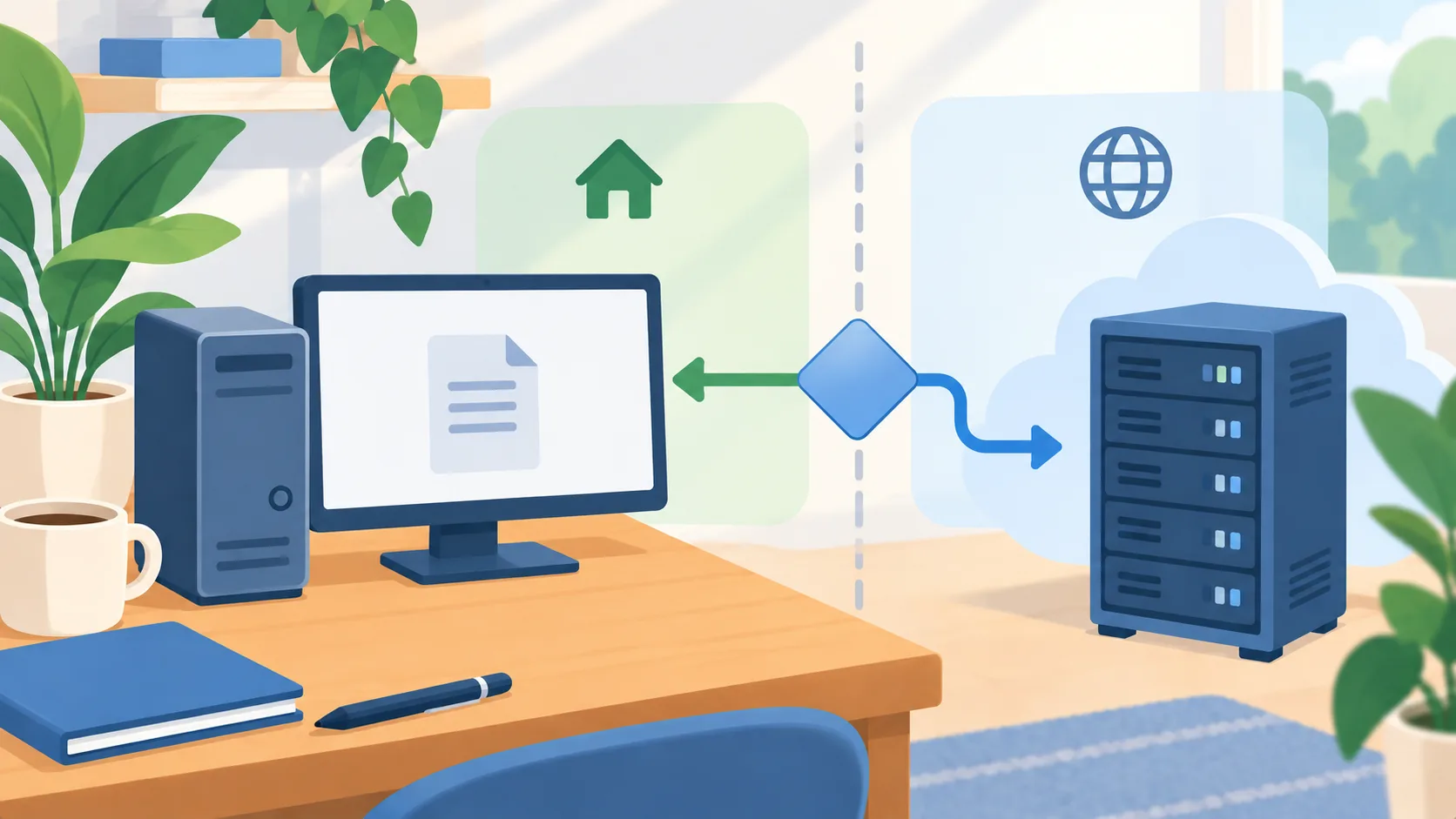
The IFA announcement targets setup friction
On September 3, 2026, NVIDIA described local-AI updates announced at IFA. The company said simplified local model setup was coming to several agent applications on Windows and introduced NVIDIA PAIR, a personal AI router intended to distribute inference across PCs on a user’s local network. NVIDIA also described inference-runtime optimizations and partner support. These are vendor announcements; availability can vary by application, operating system, GPU, and rollout timing, so confirm the exact combination before planning around it.
The operational change is about reducing configuration work and using nearby machines as part of a local inference setup. That may make experimentation more approachable for a small team. It does not by itself show that a local workflow is cheaper, faster for a given task, or private across every component.
Compare full cost, not just API charges
A local system has costs that may be easy to overlook: workstation purchase or upgrade, power, cooling, storage, backups, software maintenance, and time spent troubleshooting. If more than one computer shares inference, the network and device availability become part of the system. Hosted services also carry cost, but often include managed capacity and updates. Compare the two with the same workload and include who keeps the system functioning.
Run a practical test on the hardware you own. Measure response time, memory pressure, concurrency, and task quality for normal and peak use. Test what happens when one participating computer sleeps, reboots, or disconnects. If a workflow can send selected requests to a cloud model, decide which fields may leave the network and require an explicit choice before escalation.
Privacy depends on the actual route
Local inference can reduce the need to send some prompts to an external endpoint, but the privacy boundary includes the agent app, model runtime, logs, plugins, and any connected services. A “local” label should prompt questions: where are prompts and outputs saved; which tools can read files; does telemetry leave the device; and what happens when the system falls back to a hosted model? Review those paths using synthetic or low-sensitivity data first.
An exception is a task that requires fresh web information or a hosted capability unavailable locally. In that case, a hybrid design may be reasonable if the user can see what information is being sent and the business has approved the destination. If a workflow cannot enforce that distinction, keep confidential data out until the boundary is clear.
Pilot one workload before buying hardware
Choose a narrow task with a measurable baseline, such as classifying internal documents or drafting a first-pass summary. Define acceptable quality and latency, test a local configuration, and compare it with the existing hosted option. Record setup time and recurring maintenance alongside answer quality. If the local version only works with a particular device configuration, document that dependency so it does not become an invisible single point of failure.
NVIDIA’s announcement is a sign that local agent setup is becoming a product focus. For an owner, the decision remains specific: does a local or distributed setup improve control or cost for this workload enough to justify the hardware and operating responsibility? A short instrumented pilot answers that more reliably than the headline.