A deployment skill changed its order of operations
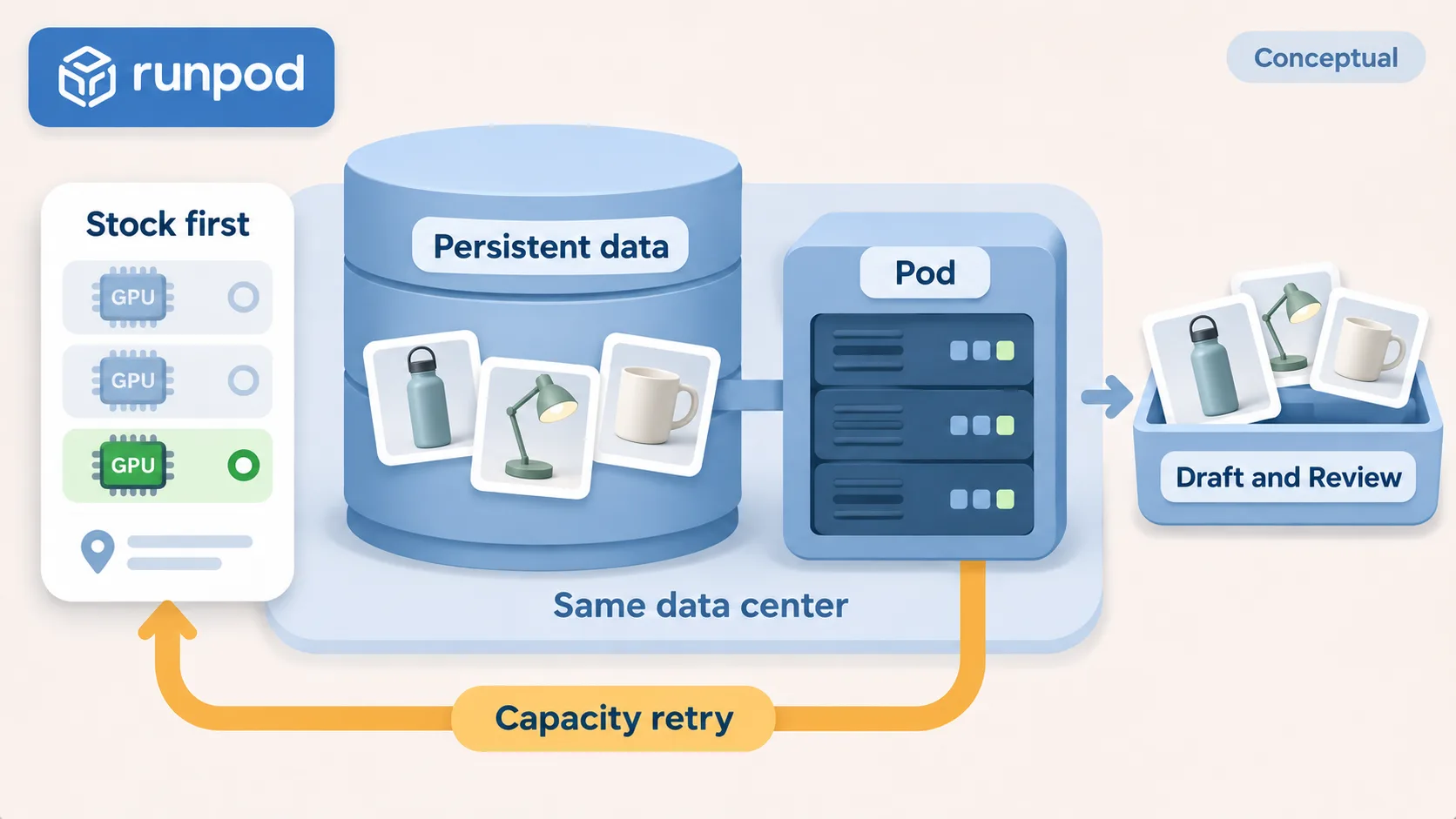
Runpod’s November 10 article about its agent skills describes a small but consequential correction made in the first week of November. The earlier Pod deployment procedure could create a network volume before checking GPU stock. If the requested capacity was unavailable and the agent tried another data center, the volume’s location could turn that retry into a delete-and-recreate cycle. A public GitHub change dated November 5 records the correction: read GPU availability first, choose a data center with stock, and create the volume only after that location is settled.
The skill now says to keep the volume if capacity fails and never delete it just to try another data center. Runpod’s current documentation describes network volumes as persistent beyond the compute resource and limits Pod use to its Secure Cloud; GPU choices depend on the volume’s location. This is a procedural update to an existing agent workflow, not evidence that Runpod’s MCP or every listed capability first launched on November 10.
Who can use this workflow
This pattern is for a team with an existing Runpod account, a supported coding agent configured for Runpod’s MCP, and the Pod deployment skill. Runpod publishes setup instructions, but those do not prove a particular account is connected or that a GPU is available. The account owner still reviews proposals before billable compute or storage is created.
It matters when a job needs persistent files, such as model weights, checkpoints, or a batch of images. The team should decide which GPU classes and locations are acceptable, what data may be stored, and who can approve a cost-bearing retry. An infrastructure skill does not grant blanket approval.
Why capacity and storage are linked
A network volume has a location as well as a size. Creating it before checking GPU stock can turn a capacity problem into a storage problem. Reading stock first exposes that dependency before data is placed. If no suitable capacity is available, pause before creating the volume and present the choices to the owner.
After a volume exists, choosing another data center is a separate decision. Keeping the original preserves its data while the owner considers waiting, retrying in its location, or planning a migration. A volume existing does not prove the Pod started, the application read the intended files, or the business task finished.
ShepBuild analysis: separate resource state from job state
Consider a hypothetical recurring catalog-image batch using public product photos or approved synthetic examples. Before launch, an owner can identify the exact input set, expected outputs, acceptable image checks, and the data center choices the job may use. The agent can read GPU availability first. Only after the owner approves a suitable location and the storage plan should the workflow create one volume there and request the Pod in the same location.
If stock disappears between the read and the create, the run should stop at a recorded capacity state. It should retain the input and any output already written, report which step failed, and ask before changing location or incurring another cost. A successful Pod create is an infrastructure event; the business job is complete only when the expected files exist and a reviewer checks them against the input list and quality criteria. These are different states and should have separate records.
A retry can begin with a fresh stock read while data stays at its original location. If another location is required, approve a migration plan naming the source, destination, verification step, and owner. Connecting an agent to MCP does not establish private handling or authorize a silent move or deletion.
A practical next step
Before using this pattern, write a run card with the input batch, expected result, allowed GPU classes and locations, volume owner, retry limit, and reviewer. Record capacity, volume creation, Pod readiness, application completion, and output review separately. Decide what to preserve on failure and who may approve another location.
A first evaluation can use public or approved synthetic images and end with a reviewable output folder. Keep customer material out until the complete data path, account permissions, retention, and recovery process have been assessed for that use. The November correction offers a concrete control point: choose available compute and its location before creating persistent storage, then treat any later move as an explicit business decision.