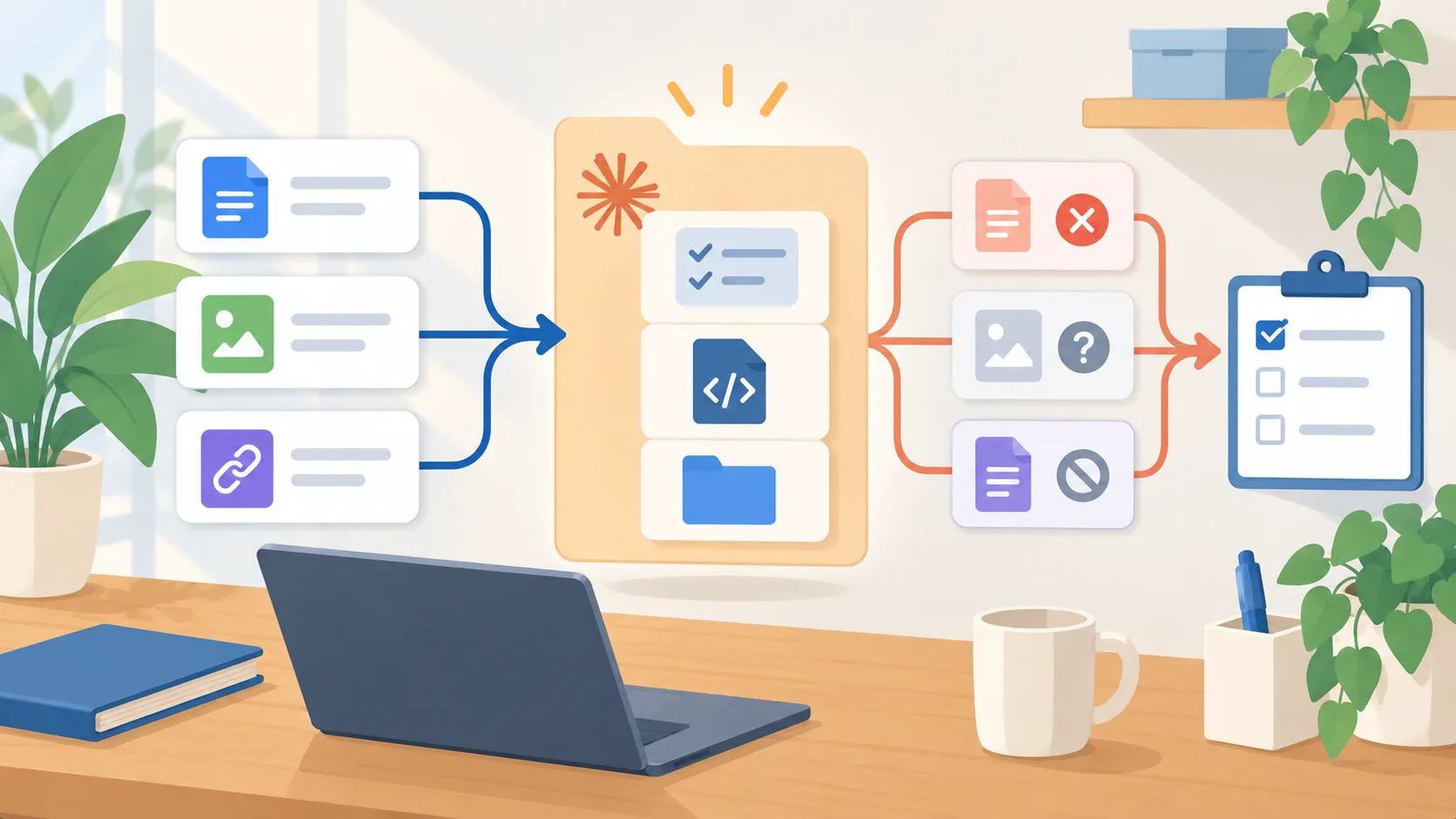
What the pattern is
Anthropic introduced Agent Skills in October 2025 as folders that combine instructions with relevant scripts and reference material. A general agent can load the matching skill when a task calls for it. The format packages procedural knowledge; it does not prove that a workflow is correct or suitable for a particular company.
This creates a practical alternative to building a separate assistant for each recurring job. One agent can use a focused set of instructions and tools when needed, provided the team knows how the skill is selected and how its output is checked.
Who can use it and when
A small team can use this pattern when people repeat the same steps, refer to the same approved material, and expect a stable output. Examples include formatting a recurring report or collecting a known set of fields for review. A skill is less useful when the task changes every time or depends on unrecorded judgment.
Start with an existing process that already has a human owner. Capture the trigger, required inputs, steps, and acceptance checks. Keep permissions and credentials outside the instructional file unless the platform has an explicit safe mechanism for them.
Why reuse can help
A reusable procedure can reduce repeated setup and preserve corrections that would otherwise disappear at the end of a chat. It can also create a common place to update examples, scripts, and rules when the process changes. The value comes from maintainable instructions and a repeatable test, not from the label “skill.”
Too many overlapping skills can make routing harder. Descriptions should say what job a skill performs and when it should run. If two skills compete for the same request, simplify their boundaries before adding more instructions.
ShepBuild analysis
Treat each skill as a small maintained software component. Give it one responsibility, a clear owner, a change history, and representative test cases. Keep input data limited to what the task requires. The agent should produce evidence that lets a reviewer check whether it followed the procedure.
A correction should improve the durable workflow only when the owner agrees it generalizes. A one-time exception may belong in the current task, not in the shared skill. Otherwise a temporary adjustment can silently become a standing rule for everyone.
Practical next step
Pick one process staff repeat at least weekly. Write the expected result and list common failure cases before building the skill. Test it with ordinary, incomplete, and out-of-scope inputs. Compare its output with the current manual procedure and record where human judgment remains necessary.
Keep the first version narrow. Ask a second person to try the trigger phrasing without coaching and see whether the correct skill loads. Review the instructions when forms, policies, or source systems change. Do not expand access simply because reuse makes a workflow easier to invoke.
Treat updates as controlled changes. When a form, source system, or policy changes, identify which instructions and examples depend on it, then rerun the representative cases. Keep a short version note so users know when the procedure last passed its checks. If a skill is shared across teams, name the person who can approve a change and the reviewer who confirms that the new version still produces the intended result.