What was released
OpenBMB’s repository records MiniCPM5-2B as released on September 7, a compact dense model intended for on-device and resource-constrained use. The project describes agent-oriented training and publishes model files and evaluation claims. Those are developer claims; they do not substitute for checking the exact checkpoint, runtime, quantization, and sampling configuration a team will use.
A small model can look attractive for local work, but “runs on my machine” and “reliably completes this business task” are different acceptance tests. The integration path and generation settings can change the outcome.
Who can use it and when
Local models may suit bounded tasks where data locality is valuable and the business can test quality on representative examples. A team should confirm hardware capacity, supported runtime, language needs, context length, and model license before choosing a deployment path. The release page alone does not answer every operational question.
Start with draft-only tasks such as classification candidates or structured extraction for human review. Avoid autonomous actions that affect customers, money, or important records until the exact model and runtime pass a separate evaluation.
Why runtime behavior matters
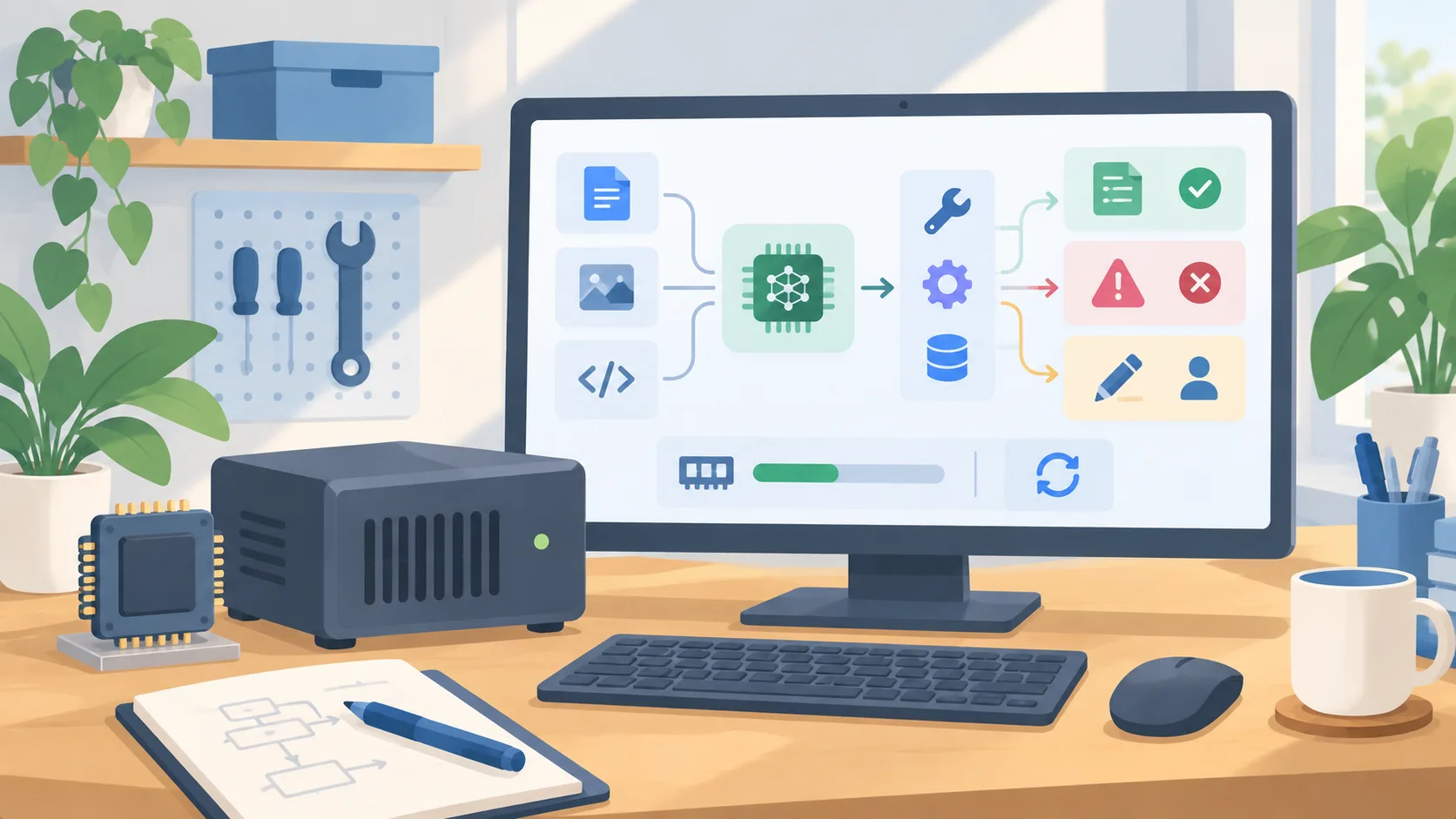
An agent depends on more than fluent text. It must produce valid tool calls, stop when required, follow the expected schema, and recognize when information is missing. Sampling defaults and quantization can affect these behaviors. A conversational demo does not establish that the model can safely use a tool on difficult inputs.
The team should preserve the specific model identifier and settings used in the test. Re-run the same evaluation after changing any of them. Otherwise a result from one setup can be incorrectly attributed to the model family as a whole.
ShepBuild analysis
Use a fixture that includes ordinary requests, incomplete inputs, confusing instructions, and examples that should be escalated. Score each outcome against a written rule: correct fields, valid tool request, refusal or clarification when needed, and reviewer repair time. Keep vendor benchmarks separate from your measurements.
For local deployment, also test resource use, start-up time, memory pressure, and fallback behavior. Decide what happens when the model is unavailable or produces malformed output. Those operational failures are part of the product, not an afterthought.
Practical next step
Load one exact checkpoint in the intended runtime and run a small, sanitized task set. Record the quantization, prompt, context limit, sampler, tool schema, and output. Have a reviewer score both success and failure cases before deciding whether the model is eligible for more work.
If results fall short, change one variable at a time. A different sampler or tool schema may improve behavior, but document the new configuration and repeat the fixture. Do not claim a model is qualified based only on its size or a vendor benchmark table.
A fair comparison also holds the task set steady. Use the same prompts, examples, output schema, and scoring rule when comparing this checkpoint with another model. Include the cost of retries and human repair, not just the first response. A smaller model may be a sensible choice for a constrained step even when it is not a general replacement, but that decision should come from the measured workflow and the hardware available to the team.