What OpenAI announced
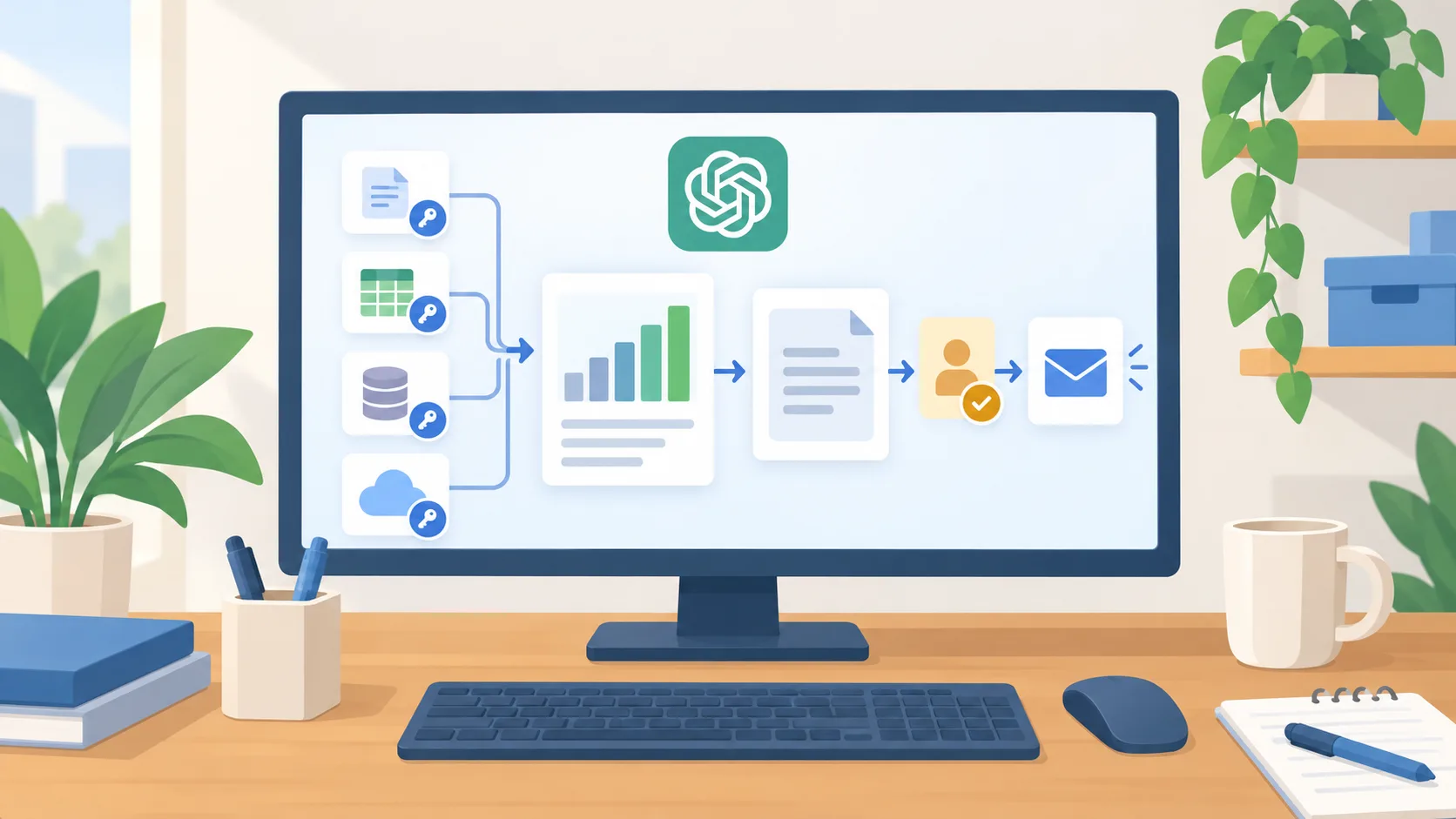
OpenAI announced ChatGPT for Financial Services on September 10 as a tailored ChatGPT Work experience with built-in financial data, planned entitlement integrations for existing subscriptions, and tools for research, financial models, and client materials. The launch page describes security and governance features, but each firm still needs to verify entitlements, data-provider access, and plan availability for its own accounts.
The practical issue is not just whether a model can analyze financial information. It is whether each person and each workflow is allowed to use the particular source, and whether the answer preserves the source context needed for review.
Who can use it and when
The product is intended for financial-services teams, but an announcement does not establish that a firm’s existing subscriptions, client restrictions, or internal policies are covered. Before any pilot, confirm the exact accounts, data entitlements, authorized users, retention settings, and permitted use with the responsible people.
A small firm can apply the same discipline to a non-specialized assistant connected to financial documents. Decide what can be used for internal preparation, what may be used in client-facing work, and what requires a qualified professional to verify.
Why data entitlement comes first
A correct calculation built from data a user was not entitled to access can still create a serious problem. A research answer that omits its source or date can be hard to validate. A draft may look polished while its underlying figures are stale or outside the intended account.
Access controls should follow existing permissions, not the convenience of an AI connector. The team needs to know whether the assistant inherits the user’s rights, uses a shared service account, or accesses a separate data feed, and how that behavior is logged.
ShepBuild analysis
Separate source access, analytical assistance, and client communication. A pilot can test whether the tool helps staff assemble a source-linked internal draft without giving it authority to send, publish, recommend, or update a record. The firm’s domain experts should define which outputs need independent recalculation or source review.
Avoid using a broad demo as proof of suitability. Build a small fixture with permitted sources, known answers, and intentionally difficult cases. Score whether the assistant cites the correct source, keeps units and dates straight, and flags information it cannot verify.
Practical next step
Choose one internal, non-client-facing research task. Have the data owner confirm access rights, then agree on the source list, output format, reviewer, and retention rules. Begin with read-only access and a small, sanitized set of examples.
Keep a record of corrections and missing entitlements. If the tool cannot show which source supports a material statement, narrow the use case or keep the review manual. Expand only after the relevant compliance and business owners approve the exact configuration.
A governance checklist should also cover changes over time. A user may change roles, a subscription may expire, or a provider may change the available dataset. Assign someone to review access periodically and define how a pilot is paused when an entitlement or source cannot be confirmed. This keeps the test tied to the data actually available on the day of use, instead of relying on a one-time setup review.