What OpenAI announced
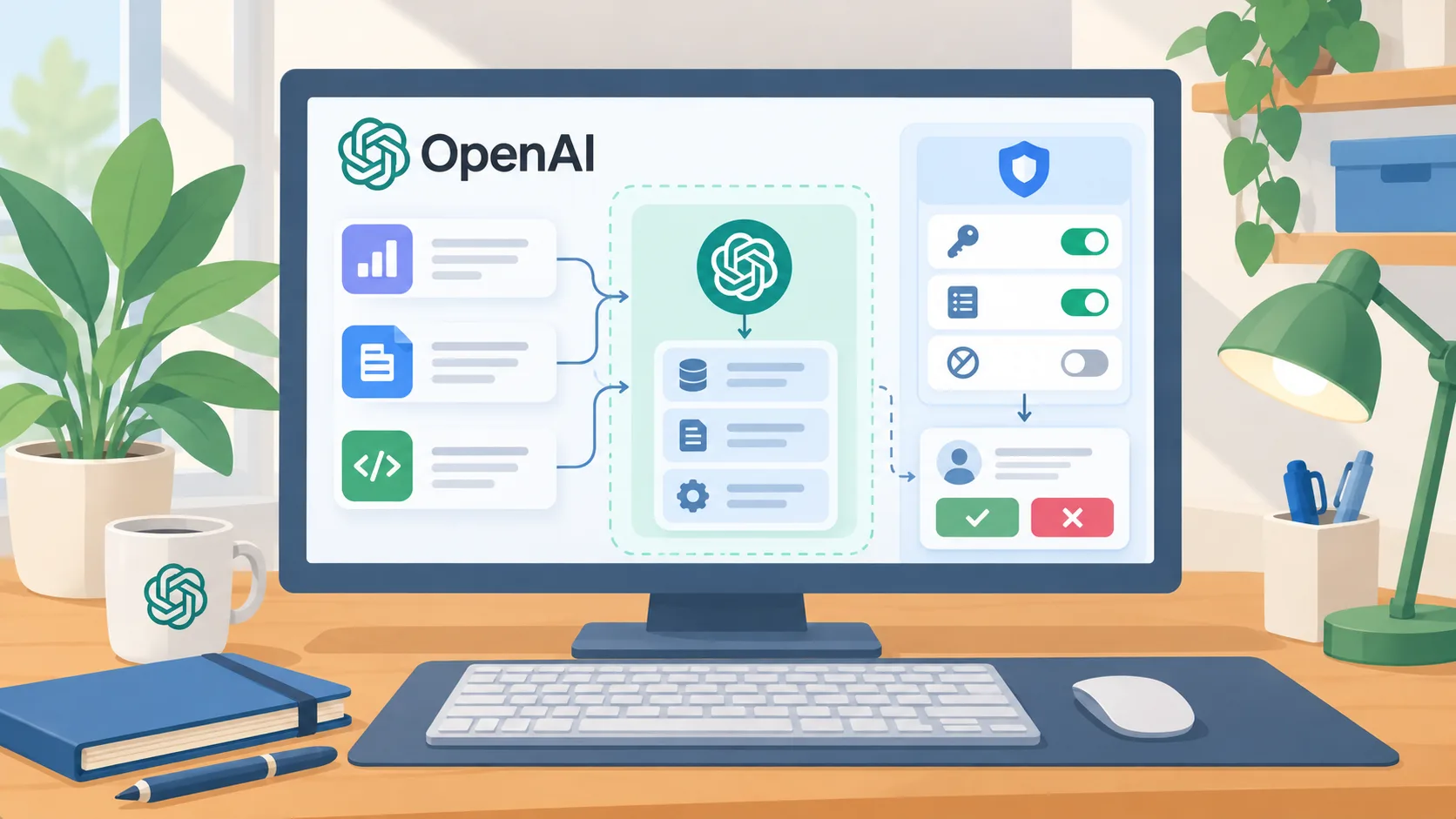
OpenAI announced the Agents API in public beta on September 10. The company describes a managed Codex harness with sessions, orchestration, context management, and support for tools and execution environments. The launch description presents managed infrastructure; it does not make the application’s business decisions for its owner.
That distinction is useful for teams that do not want to build every runtime component themselves. It does not remove the need to decide what the agent can read, which systems it can change, and who checks the result.
Who can use it and when
A managed runtime may suit a developer building a bounded workflow that has a named owner and clear inputs. A business that only needs a reminder or fixed data transfer may not need an agent at all. Use the least complex system that completes the actual handoff and leaves a useful record.
The right first task is one that is repeatable but not entirely mechanical. For example, an agent might gather approved incident context and prepare a report, while a person decides whether to make the production change.
Why runtime management is only one layer
Long-running work brings practical needs such as session recovery, visible progress, context limits, and a way to inspect outputs. A managed service can provide runtime features, but the business still chooses the credentials, tools, data, and instructions that make the session meaningful.
A task that can touch operational systems needs a stop condition. Decide what happens when the run lacks evidence, hits a permission boundary, encounters conflicting records, or cannot reach a required tool. The workflow should surface that condition instead of continuing by guesswork.
ShepBuild analysis
Separate platform responsibilities from business responsibilities. The platform can maintain sessions and coordinate work; the application owner remains responsible for the process, access policy, acceptance criteria, and final authority. Write down those boundaries before treating a beta feature as an operational dependency.
For each tool, record the specific read or write operation the agent needs. Avoid connecting a broad service account merely because it is convenient. Put consequential actions behind explicit approval and keep enough logs for someone outside the model to reconstruct the result.
Practical next step
Build a non-production proof around one incident or service request. Give the agent a limited set of sample records, the written runbook, and read-only access where possible. Require a structured report that names its sources and identifies unanswered questions.
Have the responsible operator compare the report with the ordinary process. Measure missing facts, review time, and exception handling. Keep the current workflow available until the new path meets the agreed bar and the team knows who owns a failed or paused session.
Before a beta runtime becomes part of an operating process, define what evidence is retained when a run stops or fails. An operator should be able to see the inputs provided, tools called, outputs returned, and reason for escalation without depending on a conversational recap alone. Test interrupted sessions and unavailable tools in a non-production environment. Those cases reveal whether the team can resume safely or needs to return the task to its existing manual path.